

How Artisanal Bagels Are Locally Made With Love In Cape Town
There is something wonderfully satisfying about a freshly made bagel. Its golden exterior has a gentle sheen, while the inside is soft, substantial and pleasantly chewy. Add your favourite filling, and it becomes a delicious breakfast, lunch or anytime meal.
But what gives an authentic bagel its characteristic texture and flavour?
Unlike ordinary bread rolls, traditionally made bagels go through a distinctive process involving careful mixing, shaping, boiling and baking. This combination of technique, time and attention is what transforms a simple dough into one of the world’s most recognisable baked goods.
Here is a closer look at the craft behind artisanal bagels in Cape Town.
What Makes an Artisanal Bagel Different?
A proper bagel is more than a bread roll with a hole in the middle.
The most important difference is that bagels are briefly boiled before being baked. This extra step sets the outer layer of the dough and helps create the slightly glossy crust and dense, chewy interior associated with a traditional bagel.
Artisanal production also places greater emphasis on careful handling and smaller batches. Instead of focusing solely on speed and volume, the baker can pay attention to the dough’s texture, development and consistency throughout the process.
Step 1: Preparing the Dough
The bagel-making process begins with a carefully balanced dough.
The ingredients must be accurately measured and thoroughly combined. Bagel dough is generally firmer than ordinary bread dough, which contributes to its characteristic structure and chew.
Temperature and consistency are important during this stage. The dough should be strong enough to hold its shape while still remaining workable for kneading and forming.
Step 2: Kneading and Developing Structure
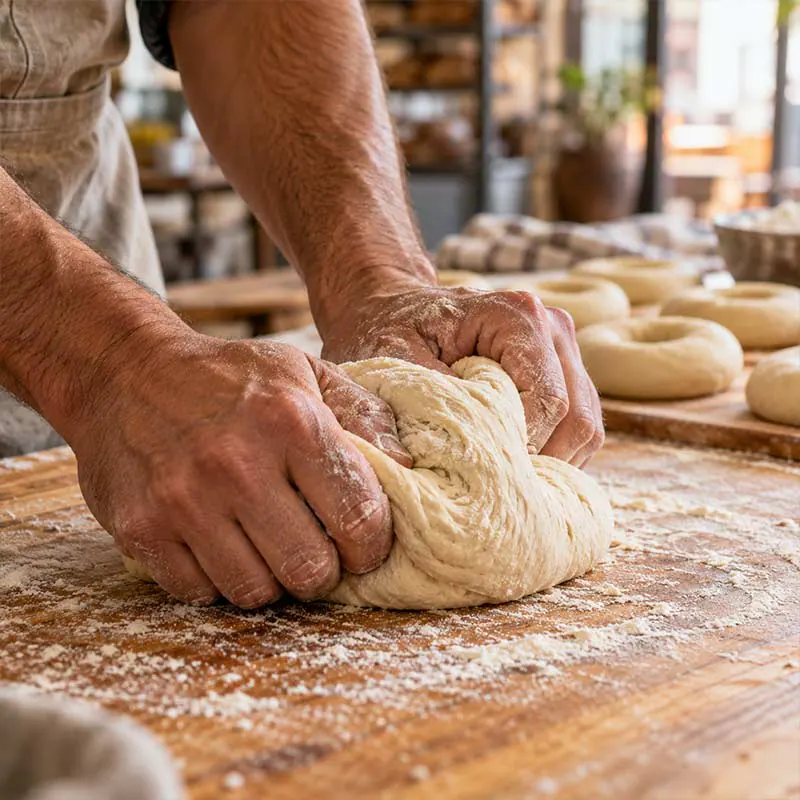
Once the ingredients have been combined, the dough is kneaded until it becomes smooth and elastic.
Kneading develops the gluten structure that allows the bagel to retain its shape during boiling and baking. This structure also helps produce the satisfying texture people expect when biting into a freshly baked bagel.
Experienced bakers learn to assess dough by touch. Its appearance and feel help indicate whether it requires more kneading, additional resting time or a small adjustment before the next stage begins.
Step 3: Giving the Dough Time to Rest
Good baking cannot be rushed.
Resting gives the dough time to relax and develop before it is shaped. Depending on the recipe and production method, the dough may also be allowed to ferment for additional flavour and texture.
This stage is particularly important in artisanal baking, where patience is treated as an essential ingredient rather than an inconvenience.
Step 4: Shaping Each Bagel
The rested dough is divided into individual portions before each bagel is shaped.
Consistency matters because evenly sized bagels bake at a similar rate. However, the subtle variations found in handmade bagels are also part of their charm. They remind us that the product has been shaped by a person rather than produced entirely by a machine.
The familiar hole in the centre is practical as well as distinctive. It helps the bagel cook more evenly during the boiling and baking stages.
Step 5: The Essential Boiling Stage
Boiling is the step that truly distinguishes a bagel from an ordinary roll.
Each shaped bagel is carefully lowered into hot water for a short period. The heat begins setting the outer surface of the dough before it reaches the oven.
This process helps create three defining characteristics:
- A smooth, lightly glossy exterior
- A golden crust that holds its shape
- A firm and pleasantly chewy texture
Skipping this stage may result in a tasty circular roll, but it will not have the same character as a traditionally prepared bagel.
Step 6: Adding the Toppings
After boiling, the bagels can be finished with a range of toppings.
Popular choices include sesame seeds, poppy seeds, mixed seeds and savoury seasoning blends. Plain bagels remain a favourite because their simple flavour pairs well with both sweet and savoury fillings.
Toppings should complement the bagel rather than overpower it. A good bagel should still taste delicious even before anything is added to the centre.
Step 7: Baking Until Golden
The prepared bagels are transferred to the oven and baked until they develop a rich, golden colour.
The oven completes the transformation that began in the boiling water. The outside becomes beautifully coloured and lightly crisp, while the centre retains its distinctive density and chew.
Freshly baked bagels should feel substantial without being heavy and structured without being dry.
Why Small-Batch Bagels Are Special
Small-batch production gives bakers greater control over each part of the process.
Dough can respond differently depending on temperature, humidity and other environmental factors. Working in manageable batches makes it easier to observe these changes and make careful adjustments when required.
It also means bagels can be baked regularly and enjoyed closer to the time they leave the oven. Freshness makes a noticeable difference to their flavour, aroma and texture.
Cape Town’s Growing Love for Local Food
Cape Town has a vibrant artisanal food culture shaped by independent bakers, local producers, markets and neighbourhood businesses.
Customers increasingly want to know how their food is made and who is responsible for making it. They appreciate products that reflect skill, care and a genuine connection to the local community.
Choosing locally made bagels supports this creative food culture. It helps independent businesses continue developing distinctive products while keeping more value within the local economy.
Delicious Ways to Enjoy a Fresh Bagel
A well-made bagel provides the perfect base for a wide variety of meals. Some serving ideas include:
- Cream cheese, smoked salmon and fresh herbs
- Scrambled egg, cheese and tomato
- Avocado, rocket and roasted vegetables
- Chicken, mayonnaise and crisp salad leaves
- Peanut butter, banana and a drizzle of honey
- Butter and locally made fruit preserve
Bagels are equally suitable for a relaxed weekend breakfast, a convenient office lunch or a carefully prepared picnic.
For the best experience, slice and lightly toast the bagel before adding your chosen filling. Toasting refreshes the surface and creates a delicious contrast between the warm interior and the toppings.
Celebrating the Craft Behind Every Bagel
Making an artisanal bagel requires more than following a basic recipe. It calls for an understanding of dough, thoughtful preparation and careful attention at every stage.
From mixing and kneading to shaping, boiling and baking, each step contributes something important to the final result.
Melt celebrates the makers, flavours and creative spirit of the Western Cape. By choosing locally made food, you are not simply buying something delicious—you are supporting the people and skills that make Cape Town’s food culture so special.
Discover more local products, stories and inspiration from Melt.